May 7, 2012

失落了的人情味 – 深夜食堂


深夜堂是日本漫畫家安倍夜郎的作品,描述一家營業時間由半夜十二點到早上七點的小食堂,特別的時段,引來特別的客人。這家店沒有明確菜單,只要客人想吃,有材料的話就會盡量做。一故事一菜式,短小精幹,這間小小的食堂仿似輕描卻道盡了都市人生縮影。食堂飄散出來的香味,充滿著鄰里跟食堂老闆暖心窩心的人情味。獲得《第55回小學館漫畫獎》及《第39回漫畫家協會大獎》。絕對值得細細品賞。

陸陸續續已出版了六集(第六集出版日期:2012/03/28),不容錯過!

一向不賣日本漫畫的商務也加入銷售這本漫畫,受歡迎程度可以想像!


成功的日本漫畫定會改編為日劇:
http://www.dailymotion.com/video/xlsjqq_yyyy2-y01y-yyyy_shortfilms 

http://v.pptv.com/show/8hMQjvZczApt61M.html 

深夜
http://www.meshiya.tv/


Apr 19, 2012

可能係香港最好的藝術館


亞洲協會藝術館 Asia Society Gallery 由一所軍火庫經活化再用後,成為一座藝術館亦是亞洲協會新會址,建築師巧妙地新造了“V形雙層”天橋將三棟零散高低不一的古舊建築連繫一起,串成一組建築群,更覺統一,關係亦親密多了。該橋的設計原是成一直線的,但為保存“果蝠”棲息之地而改為“V形”。展館不大但有國際級博物館的氣派!如無意外將會陸得到建築獎項,拭目以待。


而開館展“緣生意轉 • 佛教的藝術 Transforming Minds • Buddhism in Art 已於二月十日開始展至五月二十日,設有精簡導賞,值得花點時間一聽。其中蒙天 • 波瑪的名作《蓮聲》,是將許多赤陶鐘一行一行疊起成為半圓形的牆,上面加金蓮莖和蓮瓣。作品雖然沒有一個佛像,但站在其前面,內心會不其然產生一種和諧與安寧。


Michael Joo 的宇宙寶貝》令人眼前一亮,用了鏡、平板電視、錄像投影、光纜、即視監控攝影機及公元二世紀末的犍陀佛像組成,效果震撼,意念新鮮而令人反思,更成為此次展覽的重點作品。


唯一美中不足藝術館內 AMMO 餐廳還未投入服務,未能賞展之餘嘆嘆咖啡,有點可惜。


 Asia Society Hong Kong


Apr 17, 2012

跟住呢...


正如電影配樂大師久石讓所說“所謂出色的專業人士,指的就是能持續不斷表現自己專業能力的人。”

相信坂本龍一就是其中一位。

《音樂使人自由》裡談及了坂本龍一由求學時期到最近(2009)的口述自傳,國中時期(初中)曾提及一段感受就相當有趣:

...不經意看到了德布西的《弦樂四重奏》...
我偷偷把這張唱片帶走... 聽了之後,我感到極度震撼。

...也許由於太過著迷,我逐漸將自我與德布西混在一起,對他經歷的一切感同身受,漸漸認為自己就是早已逝世多年的德布西,覺得自己就是他投胎轉世而來。我甚至心想:自己為什麼會在這種地方?又為何是說著日文?我還會模仿德布西的筆跡,在筆記本上練習他的簽名「Claude Debussy」,總共寫了好幾頁之多。


另一片段比較深刻是坂本龍一於一九九零年已經移居紐約,二零零一年當他剛從巴西完成工作返抵紐約,便發生911恐怖攻擊事件...

他還拍了照片...


由小學、國中、高中、大學YMO - Yellow Magic Orchestra,為貝托魯奇的電影《末代皇帝》配樂,邁向世界到從事許多環境保護以及和平反核的活動,推動「more trees」。發起反地雷的音樂計劃 – zero landmine 等等,內容豐富多采。 

跟住呢... 我就去尋找德布西 Claude Debussy...
原來他倆的音樂又實在感覺相當近似喔!


坂本龍一以一曲Opus紀念武滿徹老師
http://www.youtube.com/watch?v=17HtJ5319Bo

坂本龍一 Ryuichi Sakamoto
http://sitesakamoto.com/

然後...


一面聽著電影配樂大師久石讓的音樂,一面寫這篇blog,實在享受。回想起閱讀他的著作《感動,如此創造》,描述認真的音樂事業, 其中提及若果久石讓需要在音樂演奏會上彈奏鋼琴,大師如他還會於演奏會前幾天每天練琴十多小時以上,認真程度令人佩服,成功那有僥倖 

當然一定不可不談他的創作靈感,訓練直覺能力的方法等等,從事創作的不可錯過。

嚴肅的探討世界電影配樂方式,研究亞州音樂文化,其中提到他為一部韓國電影配樂的經驗,然後令我發現了這一部電影... 歡迎來到東莫村》(Welcome to Dongmakgol)


電影講述一九五零年南北韓內戰,加上美國盟軍於一個隔世桃花源 – 東莫村發生的連串事故,故事題材特別而不乏娛樂性,可喜可敬,令人深思。難怪在韓國叫好叫座,獲獎無數,更包括由久石讓負責電影配樂的最佳電影配樂獎。


久石讓 Joe Hisaishi
http://www.joehisaishi.com/index.php


歡迎來到東莫村其中精采一段
Welcome to Dongmakgol - Rain scene
http://www.youtube.com/watch?v=HcvO_3hlpRo&feature=related


Apr 3, 2012

向MPW致敬


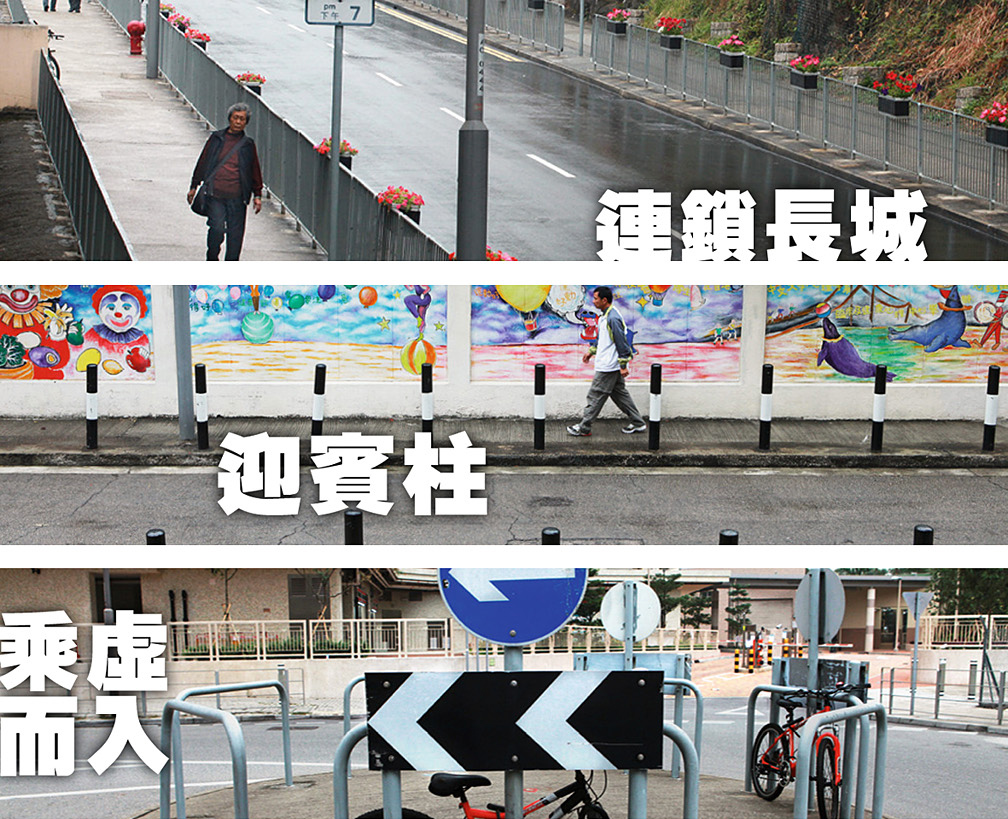
估不到一份娛樂消閒雜誌會做如此這般題材,實在難得,十分可敬!剛剛出版最新一期(2264)明報周刊,一刊三冊其中別冊MPW封面主題《欄杆處處,圍城管治》,探討連綿欄杆現象,將香港人習以為常的欄杆陣化作主角,跟學者、權威研究城市空間管治;當中管治取態等等課題...  有趣有心...


向MPW致以特別敬意!


鄧達智於四月五日蘋果日報專欄亦有提及...
「欄杆圍籠之城」:


Mar 30, 2012

Always on the side of the Egg


. . . 經歷香港小圈子選舉,引發起強烈的無力感
想起村上春樹於耶路撒冷的一篇領獎講話 . . .


By Haruki Murakami 村上春樹
International Book Fair in Jerusalem, Sunday, 15 feb 2009

I have come to Jerusalem today as a novelist, which is to say as a professional spinner of lies.

Of course, novelists are not the only ones who tell lies. Politicians do it, too, as we all know.  Diplomats and military men tell their own kinds of lies on occasion, as do used car salesmen, butchers and builders.  The lies of novelists differ from others, however, in that no one criticizes the novelist as immoral for telling them.  Indeed, the bigger and better his lies and the more ingeniously he creates them, the more he is likely to be praised by the public and the critics.

Why should that be?  My answer would be this: Namely, that by telling skillful lies – which is to say, by making up fictions that appear to be true – the novelist can bring a truth out to a new location and shine a new light on it.  In most cases, it is virtually impossible to grasp a truth in its original form and depict it accurately.  This is why we try to grab its tail by luring the truth from its hiding place, transferring it to a fictional location, and replacing it with a fictional form.  In order to accomplish this, however, we first have to clarify where the truth lies within us.  This is an important qualification for making up good lies.


Today, however, I have no intention of lying.  I will try to be as honest as I can.  There are a few days in the year when I do not engage in telling lies, and today happens to be one of them.  So let me tell you the truth.  A fair number of people advised me not to come here to accept the Jerusalem Prize.  Some even warned me they would instigate a boycott of my books if I came.  The reason for this, of course, was the fierce battle that was raging in Gaza.

The UN reported that more than a thousand people had lost their lives in the blockaded Gaza City, many of them unarmed citizens – children and old people.  Any number of times after receiving notice of the award, I asked myself whether traveling to Israel at a time like this and accepting a literary prize was the proper thing to do, whether this would create the impression that I supported one side in the conflict, that I endorsed the policies of a nation that chose to unleash its overwhelming military power.  This is an impression, of course, that I would not wish to give.  I do not approve of any war, and I do not support any nation.  Neither, of course, do I wish to see my books subjected to a boycott.
 

Finally, however, after careful consideration, I made up my mind to come here.  One reason for my decision was that all too many people advised me not to do it.  Perhaps, like many other novelists, I tend to do the exact opposite of what I am told. If people are telling me – and especially if they are warning me – “don't go there,” “don't do that,” I tend to want to “go there” and “do that.”  It's in my nature, you might say, as a novelist.  Novelists are a special breed.  They cannot genuinely trust anything they have not seen with their own eyes or touched with their own hands.  And that is why I am here. I chose to come here rather than stay away.  I chose to see for myself rather than not to see.  I chose to speak to you rather than to say nothing.  This is not to say that I am here to deliver a political message.  

To make judgments about right and wrong is one of the novelist's most important duties, of course.  It is left to each writer, however, to decide upon the form in which he or she will convey those judgments to others.  I myself prefer to transform them into stories – stories that tend toward the surreal.  Which is why I do not intend to stand before you today delivering a direct political message.  Please do, however, allow me to deliver one very personal message.  It is something that I always keep in mind while I am writing fiction.  I have never gone so far as to write it on a piece of paper and paste it to the wall: Rather, it is carved into the wall of my mind, and it goes something like this: “Between a high, solid wall and an egg that breaks against it, I will always stand on the side of the egg.”  Yes, no matter how right the wall may be and how wrong the egg, I will stand with the egg. 

Someone else will have to decide what is right and what is wrong; perhaps time or history will decide.  If there were a novelist who, for whatever reason, wrote works standing with the wall, of what value would such works be?  What is the meaning of this metaphor?  In some cases, it is all too simple and clear.  Bombers and tanks and rockets and white phosphorus shells are that high, solid wall.  The eggs are the unarmed civilians who are crushed and burned and shot by them.  This is one meaning of the metaphor.  This is not all, though.  It carries a deeper meaning.  

Think of it this way.  Each of us is, more or less, an egg.  Each of us is a unique, irreplaceable soul enclosed in a fragile shell.  This is true of me, and it is true of each of you.  And each of us, to a greater or lesser degree, is confronting a high, solid wall.  The wall has a name: It is The System.  The System is supposed to protect us, but sometimes it takes on a life of its own, and then it begins to kill us and cause us to kill others – coldly, efficiently, systematically.  I have only one reason to write novels, and that is to bring the dignity of the individual soul to the surface and shine a light upon it.  The purpose of a story is to sound an alarm, to keep a light trained on The System in order to prevent it from tangling our souls in its web and demeaning them.  I fully believe it is the novelist's job to keep trying to clarify the uniqueness of each individual soul by writing stories – stories of life and death, stories of love, stories that make people cry and quake with fear and shake with laughter.  This is why we go on, day after day, concocting fictions with utter seriousness.
 

My father died last year at the age of 90.  He was a retired teacher and a part–time Buddhist priest.  When he was in graduate school, he was drafted into the army and sent to fight in China.  As a child born after the war, I used to see him every morning before breakfast offering up long, deeply–felt prayers at the Buddhist altar in our house.  One time I asked him why he did this, and he told me he was praying for the people who had died in the war.  He was praying for all the people who died, he said, both ally and enemy alike.  Staring at his back as he knelt at the altar, I seemed to feel the shadow of death hovering around him.  My father died, and with him he took his memories, memories that I can never know.  But the presence of death that lurked about him remains in my own memory.  It is one of the few things I carry on from him, and one of the most important.
 

I have only one thing I hope to convey to you today. We are all human beings, individuals transcending nationality and race and religion, fragile eggs faced with a solid wall called The System. To all appearances, we have no hope of winning. The wall is too high, too strong – and too cold. If we have any hope of victory at all, it will have to come from our believing in the utter uniqueness and irreplaceability of our own and others’ souls and from the warmth we gain by joining souls together.
 

Take a moment to think about this.  Each of us possesses a tangible, living soul.  The System has no such thing.  We must not allow The System to exploit us.  We must not allow The System to take on a life of its own.  The System did not make us: We made The System.  That is all I have to say to you.  I am grateful to have been awarded the Jerusalem Prize.  I am grateful that my books are being read by people in many parts of the world.  And I am glad to have had the opportunity to speak to you here today.


t h e   S y s t e m . . .   t h e   W a l l . . .

另特別送上 Pink Floyd – Another Brick In The Wall (HQ)
http://www.youtube.com/watch?v=YR5ApYxkU-U&feature=related


Mar 23, 2012

雙“松”享受


K y o t o  M a r a t h o n  2 0 1 2  +  O s a k a  M a r a t h o n  2 0 1 1
二零一一十月尾跑完第屆大阪國際馬拉松,完成人生的第次(全馬42K),遲遲未有動筆,經過半年沉殿,感受依然深刻,心想倒不如跑完京都馬拉松(三月十一日舉行亦即是三一一1周年)一次過寫兩個日本馬拉松吧。雖然,出發前已經想好題目 – 雙“松”享受... 


其實... 自己對今次馬拉松連半點信心也沒有,經過香港馬拉松一役,弄傷左腳,休息了整整兩個星期,再度跑練時就知左腳未有完全恢復,只短短跑了4K,已沒再跑下去,沒法子只好死死地氣去看骨醫,他指示需要連治療三天,之後完全休息七日才可以再跑,晴天霹靂,天啊!計一計數發覺可以跑已經係三月一,距離三一一只得十天!亦即是在缺練接近一個月,跑練幾次後就要面對整整42K的完完全全的馬拉松,實在困惑...

接受第二天治療後,骨醫吩咐還是休息十天比較妥當,Jesus Christ! 足足要等到三月四才可跑練,大事不妙!正常人都要持續訓練三數個月,更會在賽前整整一個星期完全停止跑練只會好好休息喔!此行如無意外都只可以陪跑半程或勉強完成30K上下吧... 但京都此行意義實在重大,賽事純粹為紀念日本大地震而舉辦,是京都的第一次亦係第一屆,又碰巧今年三一一正正是星期天嘛(通常馬拉松賽事會於星期日舉行)。不可能不參與... 就當作為對日本的支持罷,此行會冒著雙“松”打擊之險而去,因為好可能繼香港馬拉松未能完成後,再一次失落於京都... (可瀏覽舊POST: 天與地 – 香港馬拉松2012)

半年後再次踏足大阪關西機場,一面回憶大阪國際馬拉松的美好片片斷斷,另方面忐忑不安擔心能否“完走”京馬,踏出機場幸有陽光作伴,跟香港數星期boring灰天成了對比,心情都寬鬆了不少。 情不自禁深深吸了一口清新空氣,便趕往領取跑手包。晚飯後於酒店內看著電視,分別有好幾個電視台回顧大地震,既想看既不忍看,為免影響心情影響睡眠質素,還是早點休息吧。

三一一京都藍天無雲,天氣清涼(溫度4-6°C),是理想跑步天氣,完全符合寧冷莫暖這條件,加上比較乾爽又合符寧乾莫濕這環境因素,當天濕度55%,近乎完美!再次想起大阪過百萬市民支持打氣的情景(大阪人口2.67m),依然感動!京馬比賽起點是在體育館內,感覺氣氛比大阪 (大阪馬拉松起點在大阪城公園)。萬四名跑手為三一一地震默哀一分鐘後,調整心情踏上跑途。


今次全馬策略跟大阪有所改變,因缺少訓練,會刻意比平時再跑慢一點,盡量保留體力,志在完成甚於著眼時間,碰巧京都路段時而寬闊時而狹窄,有時候想跑快點亦不容易,還好京都風景實在遠勝大阪,可有更多時間親親大自然(哈哈)。意外地賽道其中一段路完全要跑手全數停低數分鐘,實在奇景怪哉!


感激沿途為我們熱情打氣的市民,不論在路邊、騎樓屋頂上、學校商店佛寺又或是大街小巷... 都忍不住跟他們相互激掌,彷似化身為明星偶像般受他們歡迎愛戴一樣... 曾跑過一段較寬路面,因為圍觀的市民站得有點距離,留意到他們無論身體語言、眼神都渴望與跑手們激掌,還是忍不住刻意跑到他們面前誇張地大大動作的跟他們大力拍掌,引來一陣哄動歡呼。享受沿途數十個組合為跑手鼓勵打氣,路上聽到多不勝數的「乾巴爹 がんばって (加油)」,而有不少跑手亦連聲不斷回應Arigatou ありがとう (多謝)」,場面令人感動! 


順利完成26K,沒有太大壓力,感覺良好。突然間眼前出現一個“另類”指示牌,望而生厭,一個大大的TAXI指示牌放於路旁,難免令人產生放棄的念頭,恨不得立時伸手然後飛身上車...


慶幸意志戰勝這個大誘惑繼續上路,跑過36K,心頭一陣激動,克服了上一趟放棄的這一“生理及心理關口”,雖然還沒十足把握,但信心稍微提昇。


續努力跑,發現三位Pace Runners就在前面,同時看到他們鮮紅背心上“5:30”大大的白色數目字,實在有點驚恐,這就是說再跟著他們跑的話,大有可能要五個半鐘才能完成賽事喔,太可怕了!於是出盡九牛二虎之力試圖加快步速超越他們,希望能夠完成之餘而成績不至太差...


越過41K指示牌後才真真正正放下心頭巨石,有信心完成今次賽事,沒有京都市民的立喊助威、熱情激掌鼓勵;數以百計來自不同組合團隊演出打氣主辦單位細心無微不至的安排,內心絕對肯定不能創造這次奇蹟,還有路旁不時要求一起合照的“朋友們”,你們超乎想像地合作,甚至乎覺得你們比我更加開心快樂、更加投入,實在令我感動感激!永遠記得你們燦爛的笑容!


最後以“5:17”完走京都馬拉松,依然未敢相信。雖然比大阪國際馬拉松慢了超過20分鐘,興奮程度卻大大超越大阪!參與兩個日本不同城市馬拉松都來去匆匆,完成的感覺跟發了場夢沒有兩樣,行程短暫記憶卻深卻遠!

離開京都往大阪關西機場途中,天空飄著細雪,還發現一道彩虹,不其然聯想起當天大阪國際馬拉松的主題 “Making a Rainbow Together”,衷心祝福日本人民盡快消除地震、海嘯及核輻射造成的影響,早日恢復重建。

京都馬拉松相集:

或 click:
http://www.xlx2046.net/2-0-1-2.html


Mar 15, 2012

簡體字 & Typoglycemia


簡體字原來好有意思喔!簡直係先知先覺!

有興趣了解更多關於 Typoglycemia:
http://en.wikipedia.org/wiki/Typoglycemia


Mar 8, 2012

由政治冷感到快樂政治


Cuson,七十後,零二年被毓民主持的電台節目政治有心人內雄辯滔滔所觸動,麻木多年的心被吵醒... 七一遊行... 六四晚會都有出席... 零九年尾憑《五區公投漫畫》博得網民掌聲,成為新一代政治漫畫家。


把政治事件誇張地畫下來,我畫得開心,讀者睇得開心,就係曲線叫人關心政治。

Cuson 稱他的政治漫畫為「快樂政治」。


Cuson@香港人有權Say@星期二檔案(TVB)
http://www.youtube.com/watch?v=JQNKNmopr-o&feature=youtu.be

Cuson’s blog:
http://www.facebook.com/cusonlo

Cuson’s blog:


Mar 5, 2012

蘇三與特首


雖然香港劃分有 19 個區,但平常生活圈來來去去離不開三數個區,最近對牛棚藝術村內有個《特首造像》的展覽甚有興趣,於是週末到土瓜灣區走走,應以十年計沒有到訪這區,既然“跨區”倒不如先食午飯再看展覽,該是個好主意。很久前已想一試《蘇三茶室》...  就此決定。


雖然叫作茶室,但店內裝修較西化,天花裝上滿有懷舊味的吊扇,樓底甚高,空間感十足,座位亦相當闊落,長且深的茶室盡頭係開放式廚房,貓貓裝飾隨處可見,增添幾分個性人性。淺賞一頓午飯,已覺蘇三茶室是誠意小店,臨走索取了茶室 menu,希望日後到來一賞晚飯。


估不到第一次到牛棚睇展,好可能變為最後一次,因為藝術村租期快將滿約,用途/方向還未有定案。牛棚藝術村前身為馬頭角牛房,此類“紅磚”歷史建築群是香港僅存,現已被古物古蹟辦事處列為三級歷史建築。

我要造凸首 2012 by Chau Shik Hung  Arcylic on Wood


特首工程-紅白藍 by Leo Wong  混合媒體


首選鬧劇 by 林旭輝


香港特首選舉 by Wong Shun Kit  Ink on Paper